
No. Membrane plates with elastomeric diaphragms wear faster than solid recessed chamber plates. Diaphragm life depends on squeeze pressure, cycle count, slurry abrasiveness, chemical compatibility, and temperature. Solid chamber plates routinely outlast the membranes under the same duty. The trade-off is accepted when extra dryness and shorter cycles lower operating cost.
Why do membrane plates wear faster?
Membrane plates rely on flexible diaphragms that expand and contract under 15–25 bar every cycle. Repeated stretching, chemical exposure, and abrasion reduce elasticity and sealing. Solid recessed chamber plates have no moving elastomer, so they experience only wear on the plate body and cloth.
In the membrane presses we build, CNC machining and robotic welding improve plate sealing and diaphragm seating, but the elastomer remains the primary wear item.
What factors determine membrane plate life?
Key variables include squeeze pressure and frequency, slurry abrasiveness, chemical compatibility and temperature, and cake release. Higher pressure and more cycles accelerate fatigue; sharp particles abrade the surface; incompatible chemicals or heat harden or swell the elastomer.
Typical service life ranges from 1–3 years or several thousand cycles. Aggressive mineral slurries sit lower; well-conditioned municipal sludge often reaches higher.
How does membrane plate life compare to chamber plates?
Chamber plates have no diaphragm, so life is limited mainly by cloth wear and plate-face condition. Many remain in service for 5–10 years or longer. Membrane packs require planned diaphragm replacement on a shorter interval while the plate body can still last many years.
From the projects we have engineered, operators track condition through visual inspection, pressure-hold tests, and rising residual moisture.
What can you do to extend membrane diaphragm life?
Practical steps include keeping squeeze pressure within design limits, optimizing polymer conditioning for clean cake release, selecting compatible diaphragm material, and scheduling replacement by cycle count.
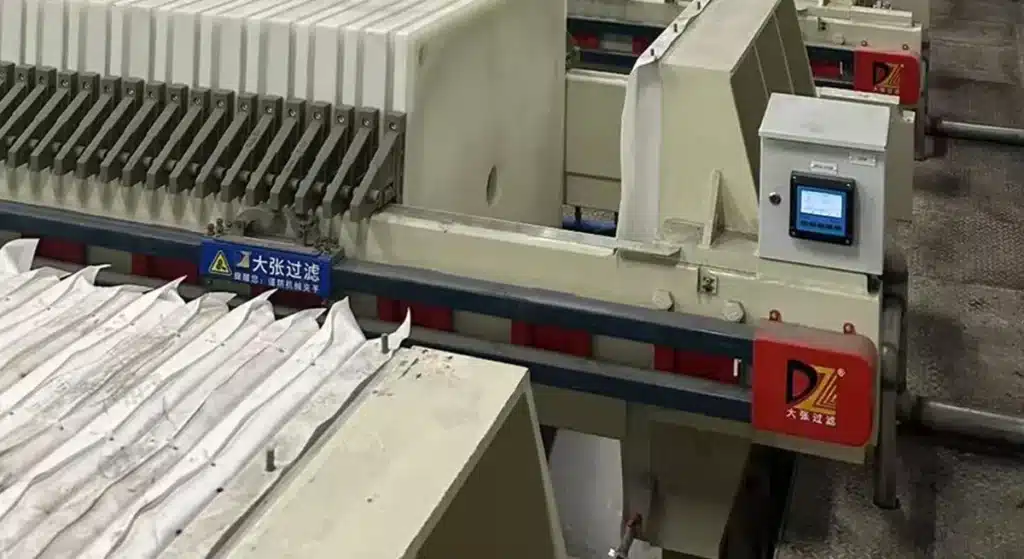
Our program-controlled automatic membrane filter presses allow precise pressure ramps and hold times, reducing peak stress compared with manual operation.
When is the extra maintenance still justified?
Higher maintenance is justified when cake dryness, cycle time, or disposal cost dominate economics. A 2–8 point moisture reduction or shorter cycle often offsets diaphragm replacement within the first years.
| Aspect | Chamber plates | Membrane plates |
|---|---|---|
| Primary wear item | Cloth, plate face | Elastomer diaphragm |
| Typical interval | Multi-year | 1–3 years or thousands of cycles |
| Replacement | Cloth change | Diaphragm or plate pack |
| Best suited for | Free-draining duty | Dryness-critical compressible sludge |
FAQ
Are membrane diaphragms repairable?
Minor damage is sometimes repairable, but most operators replace the diaphragm once sealing declines.
Does water or air squeeze affect life differently?
Both work. Water transmits pressure uniformly; air systems must stay clean and dry.
Can you run at lower pressure to extend life?
Yes. Using the minimum pressure that still meets dryness reduces fatigue with modest moisture penalty.
Do all membrane materials last the same?
No. Material grade must match chemistry and temperature. Incorrect selection shortens life sharply.
Is plate body life similar between designs?
Yes. Excluding the diaphragm, plate body life is comparable under similar conditions.
Does automation reduce diaphragm wear?
Yes. Consistent pressure profiles avoid over-pressure that shortens elastomer life.