
Cake dryness, cycle time, and disposal cost drive the choice between chamber and membrane filter presses. A chamber filter press relies on feed-pump pressure only (typically 6–15 bar). A membrane filter press adds a secondary squeeze of about 15–24 bar after cake formation. On municipal and industrial sludge, that squeeze usually cuts residual moisture by 5–12 percentage points and can shorten cycles by 30–50%. At DZ Environmental we manufacture both program-controlled chamber and automatic membrane filter presses; selection follows sludge compressibility, target solids, and throughput.
What is the difference between chamber and membrane plates?
A chamber plate forms a fixed-volume cavity; dewatering stops when pump pressure cannot overcome cake resistance. A membrane plate uses a flexible diaphragm that inflates after filtration and squeezes the cake. In the membrane presses we build, CNC machining and robotic welding keep diaphragm seals consistent so squeeze pressure stays uniform.
How much drier is membrane cake?
Membrane squeeze typically delivers 5–12 percentage points lower cake moisture than a chamber press on the same slurry. Mineral and lime-conditioned sludges often gain 4–5 dry-solids points; polymer-conditioned municipal biosolids usually gain 2–3 points. Typical bands: chamber cake 30–45% moisture; membrane cake 18–35%.
| Metric | Chamber press | Membrane press |
|---|---|---|
| Pressure source | Feed pump 6–15 bar | Pump + squeeze 15–24 bar |
| Cake moisture | Higher residual water | 5–12 points lower |
| Cycle time | Longer filtration tail | Often 30–50% shorter |
| Best fit | Easy-to-filter slurries | Compressible sludge, high disposal cost |
Does a membrane press run faster?
Usually in the plant. Chamber cycles stretch while operators wait for extra dryness that does not arrive. Membrane machines end the feed phase earlier and finish with a short squeeze. Our program-controlled machines integrate feed cutoff, squeeze, and blow-down.
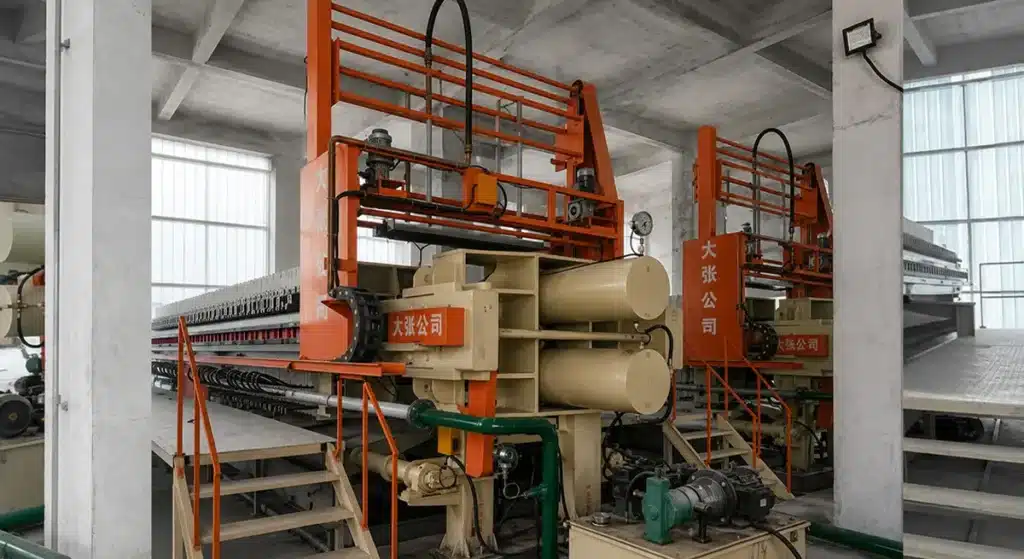
When is a chamber filter press enough?
Choose a program-controlled chamber filter press when slurry filters easily and disposal cost is moderate. Food residues, many mineral tailings, and low-compressibility sludges often meet dryness targets without squeeze. A hydraulic chamber filter press is simpler to maintain: fewer diaphragms and fewer squeeze circuits.
When should you specify a membrane filter press?
Specify an automatic membrane filter press when tipping fees, transport, or downstream drying dominate cost. From the projects we have engineered, membrane units pay back fastest on municipal digested sludge, chemical precipitates, and fine mineral slurries.
What else decides performance besides plate type?
Conditioning, cloth, feed solids, and closing force often outweigh plate style. Poor polymer or blinded cloth can erase a membrane advantage. Target 2–6% feed solids where possible. Stainless steel filter presses are used when chemistry rules out polypropylene plates.
FAQ
What cake moisture should I expect from a chamber press?
On municipal sludge, 30–45% residual moisture is common with correct feed pressure and cloth.
How much extra dryness does membrane squeeze add?
Usually 5–12 percentage points, or 2–5 dry-solids points by sludge type.
Can membrane squeeze cut cycle time?
Yes. Ending filtration earlier and squeezing often cuts total cycle time by 30–50%.
Is membrane always worth the higher plate cost?
Only if lower cake mass or higher throughput recovers the difference through disposal or capacity.
Do both types need polymer conditioning?
Almost always for municipal and organic sludges. Conditioning quality often matters more than plate type.