
A sludge filter press is a batch solid-liquid separation machine that uses pressure to force water out of sludge and produce a drier solid cake. It is widely applied in municipal wastewater treatment, industrial effluent plants, mining, chemical, and food processing to reduce sludge volume, lower disposal costs, and recover clearer filtrate. The process relies on filter plates, filter cloth, and hydraulic pressure rather than continuous mechanical compression alone. At DZ Environmental we manufacture program-controlled chamber and automatic membrane filter presses specifically engineered for reliable sludge dewatering across these applications.
How Does a Sludge Filter Press Work?
Sludge is pumped into chambers formed between filter plates covered with filter cloth. Under feed pressure (typically 7–15 bar), solids are retained on the cloth while filtrate passes through and exits the press. Once the chambers fill, the cycle ends with cake discharge. Membrane versions add a secondary high-pressure squeeze (15–30 bar) after filtration to expel extra moisture. Our program-controlled machines automate feed, pressure ramps, squeeze, and plate opening for consistent results.
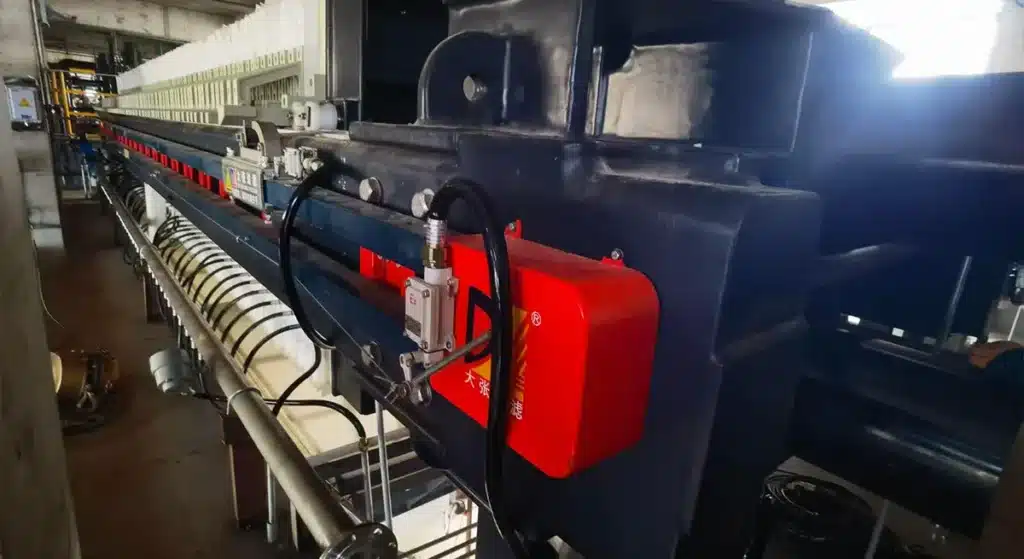
What Are the Main Components of a Sludge Filter Press?
Key parts include the frame and hydraulic closing system, filter plates (chamber or membrane type), filter cloth, feed pump and manifold, filtrate collection system, and optional automatic plate shifting or cloth washing. Polypropylene plates are standard for most municipal and chemical sludge because of chemical resistance and light weight. In the presses we build, high-precision CNC machining and robotic welding improve plate sealing and long-term reliability.
Chamber vs Membrane: Which Type Suits Your Sludge?
Chamber presses rely solely on pump pressure and suit free-draining or lower-cost applications. Membrane presses add diaphragm squeeze for lower cake moisture and shorter cycles on compressible organic sludge. Both are available as program-controlled automatic units.
| Feature | Chamber Filter Press | Membrane Filter Press |
|---|---|---|
| Dewatering method | Feed pressure only | Pressure + squeeze |
| Typical municipal cake moisture | 60–75 % | 50–65 % |
| Cycle time | Longer | 20–40 % shorter |
| Capital cost | Lower | Higher |
| Best for | Easier-to-dewater sludge | High disposal-cost sludge |
What Performance Can You Expect?
On well-conditioned municipal sludge, chamber presses commonly achieve 25–40 % dry solids; membrane presses reach 35–50 % dry solids. Cycle times range from 1–4 hours depending on sludge type, polymer dose, and automation level. Filtrate clarity is generally high when cloth selection and conditioning are correct. From the projects we have engineered, proper polymer conditioning often improves results more than changing press type alone.
What Limitations Should You Consider?
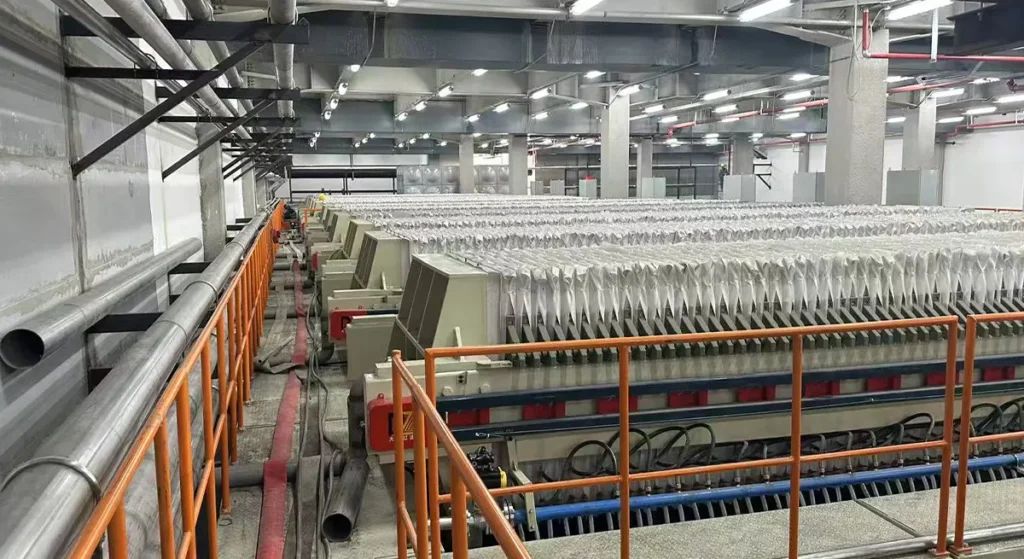
Filter presses operate in batches, so continuous high-volume plants may need multiple units or buffer tanks. Cloth blinding can reduce capacity if washing or conditioning is inadequate. Abrasive or high-temperature sludge may require special plate materials or cloth. Space for plate pack access and cake handling must be planned.
How Do You Specify the Right Sludge Filter Press?
Match filtration area and chamber volume to daily dry-solids load and target cycle time. Confirm required cake moisture, available floor space, and degree of automation (manual, semi-automatic, or fully program-controlled). Pilot testing with your actual sludge remains the most reliable way to size the machine and select cloth.
FAQ
What is the main purpose of a sludge filter press?
To reduce sludge volume by removing water under pressure, producing a handleable cake and clear filtrate while cutting disposal and transport costs.
How dry can the cake get?
Chamber presses typically reach 25–40 % dry solids on municipal sludge; membrane presses often achieve 35–50 % dry solids under similar conditions.
Is a filter press continuous or batch?
It is a batch machine. Multiple presses or holding tanks are used when continuous processing is required.
Do I need polymer conditioning?
Yes for most municipal and organic industrial sludge. Correct dosing and mixing dramatically improve filtration rate and final dryness.
Can the same press handle different sludge types?
Yes within limits, but plate type, cloth, and operating pressure may need adjustment. Pilot testing is recommended for variable feeds.
Are automatic cloth washing systems available?
Yes. Automatic water-washing options can be fitted to both chamber and membrane presses to reduce blinding and labor.
What materials are used for plates?
Polypropylene is standard for most applications. Stainless steel or special alloys are used for highly corrosive or high-temperature sludge.
How long does a typical cycle take?
Usually 1–4 hours depending on sludge characteristics, pressure profile, and whether membrane squeeze is applied.