
Yes, in some cases. A chamber filter press can be upgraded to membrane plates later if the frame, hydraulic closing system, and structural design are rated for higher squeeze pressures (typically 15–25 bar). Not every chamber press is suitable. Lighter or older frames often lack the required closing force or rigidity.
What makes a chamber press upgradeable to membrane?
The critical factor is closing force. Membrane plates require the frame to hold against the additional squeeze pressure applied by the diaphragms. Frames designed only for feed-pump pressures of 7–16 bar may lack enough structural capacity or hydraulic power.
Plate size and suspension style must also match available membrane packs. At DZ Environmental we manufacture both program-controlled chamber and automatic membrane filter presses, so possible future conversion is considered during initial engineering.
What components need to be changed?
A typical upgrade involves replacing recessed chamber plates with membrane plates, adding a squeeze system (piping, pump or compressor, valves), and upgrading the control system. Hydraulic capacity and frame integrity under the new loads must also be verified. Cloth and feed systems usually remain compatible.
What are the practical limits of a retrofit?
Even when the frame is strong enough, limits apply: existing hydraulic power may need upgrading, older controls may lack sequencing logic, and plate pack dimensions must fit the original side bars or overhead beam.
From the projects we have engineered, partial upgrades that ignore hydraulic or control capacity often deliver disappointing dryness.
When is a new membrane press the better choice?
A new membrane press is usually preferable when the existing frame is undersized, the hydraulic system is marginal, or the control platform is obsolete. New machines integrate plate design, squeeze system, and automation from the start.
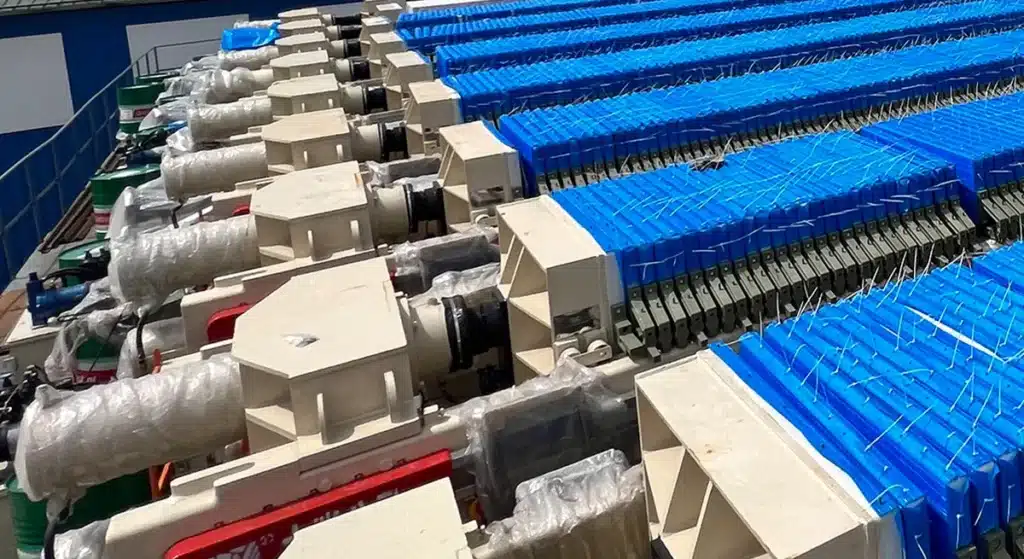
Our program-controlled automatic membrane filter presses lock fill, squeeze, and air-blow profiles into one consistent sequence.
How do you evaluate whether an existing frame can be upgraded?
Evaluation should cover design closing force, frame deflection under full load, hydraulic cylinder size and oil flow, space for squeeze piping, and plate dimension compatibility. A structural and hydraulic review is essential before ordering membrane plates.
| Factor | Upgradeable frame | Non-upgradeable frame |
|---|---|---|
| Closing force | Rated for 15–25 bar squeeze | Designed only for feed pressure |
| Hydraulics | Sufficient cylinder capacity | Marginal or undersized |
| Controls | Expandable PLC | Obsolete relay system |
| Best path | Membrane plate retrofit | New membrane press |
FAQ
Can any chamber press accept membrane plates?
No. Only frames with adequate closing force and structural rigidity can safely handle membrane squeeze pressures.
Does upgrading require a new hydraulic system?
Not always, but many need higher oil flow or cylinder capacity to maintain cycle times under squeeze loads.
Is the plate body the same size as a chamber plate?
Often yes for standard sizes, but thickness, sealing faces, and porting differ. Exact match must be confirmed.
Can you mix chamber and membrane plates?
Some designs allow mixed packs for testing, but full membrane packs deliver the intended dryness benefits.
How does upgrade cost compare to a new machine?
When the frame and hydraulics are suitable, a retrofit can be lower cost. When major work is required, a new machine is often more economical.
Does automation become more important after an upgrade?
Yes. Precise squeeze pressure ramps protect diaphragms and deliver consistent dryness.