
A membrane filter press costs more than a chamber unit. The extra money is justified only when drier cake or shorter cycles reduce disposal, transport, or labor cost enough to recover the difference. If disposal is cheap and the chamber press already meets handling limits, the membrane upgrade is often an unnecessary expense.
The real cost difference
Membrane plates, the squeeze system, and higher-pressure hydraulics raise capital cost. Operating cost then depends on three variables: final cake moisture, cycle time, and reliability of the squeeze step. At DZ Environmental we manufacture both program-controlled chamber and automatic membrane filter presses, so the choice is driven by process economics rather than product preference.
When the moisture gain pays back
Membrane squeeze typically removes an extra 3–8 percentage points of moisture on municipal sludge and 5–12 points on many industrial cakes. Every point of moisture is water you pay to haul. A drop from 62% to 55% can cut wet cake mass by more than 15%. Plants that pay high landfill or incineration fees usually recover the membrane premium within two to five years through lower wet tonnage alone.
If disposal cost is low or the cake already meets transport limits on a chamber press, the same moisture improvement produces little cash saving. In those cases the chamber machine remains the lower total-cost choice.
When shorter cycles matter more than dryness
Membrane presses can stop feeding once a coherent cake exists and finish with the squeeze step. This often shortens total cycle time compared with pumping a chamber press to the last possible drop of filtrate. Higher daily throughput on the same filtration area reduces the number of machines required or frees capacity for future load growth. The payback appears when the plant is already running near maximum hours or when labor cost per cycle is high.
Conditions that destroy the payback
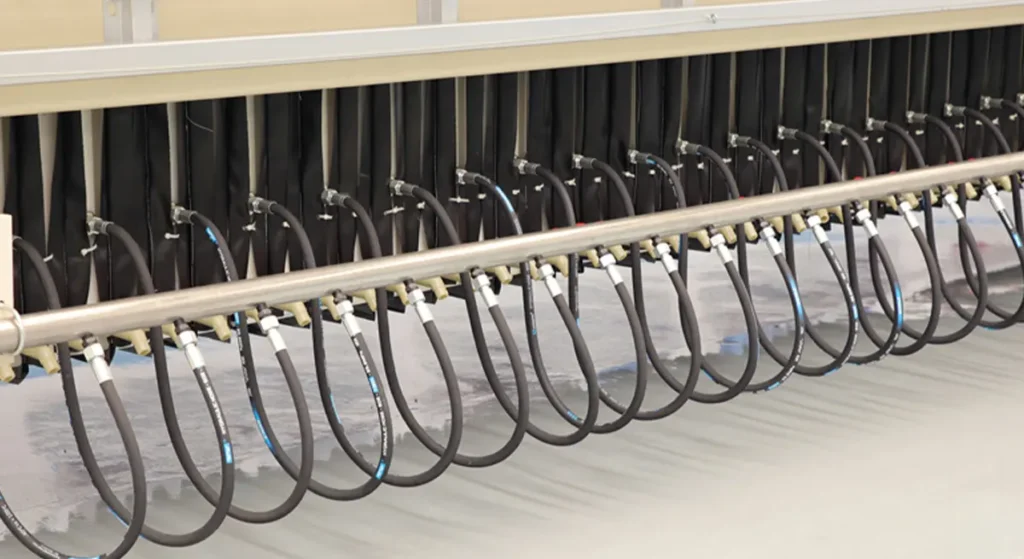
Weak polymer floc, thin feed solids, or blinded cloths erase most of the membrane advantage. The squeeze cannot expel water that is locked inside a poorly structured cake. Plants that cannot hold conditioning steady will see similar moisture on both technologies and will have paid extra for no result. Membrane systems also add maintenance items—diaphragms, squeeze media, higher-pressure seals—that must be factored into the five-year cost model.
Simple decision framework
Choose membrane when:
- Disposal or transport cost per wet ton is high
- Target moisture is difficult to reach with chamber pressure alone
- Cycle time currently limits plant capacity
Choose chamber when:
- Disposal cost is modest
- Sludge dewaters easily to the required dryness
- Capital budget is constrained and operating simplicity is valued
In the membrane presses we build, programmable squeeze timing and consistent plate sealing keep the extra dryness repeatable once chemistry is under control. The investment then becomes a controlled operating advantage instead of a gamble.
FAQ
How much extra does a membrane press cost?
Typically 20–40% more than a comparable chamber unit, depending on size and automation level.
How many moisture points are realistic?
3–8 points on municipal sludge, often more on mineral or chemical cakes.
Can cycle time really be shorter?
Yes. Many plants reduce total cycle by stopping feed earlier and using the squeeze step.
What kills the payback fastest?
Unstable polymer conditioning and blinded cloths.
Is membrane always the better long-term choice?
No. When disposal is cheap and chamber performance is already adequate, chamber remains lower total cost.