
An automatic water washing filter press is a fully automated solid-liquid separation machine with an integrated high-pressure water washing system that cleans the filter cloths after cake discharge. Traveling spray nozzles remove residual solids, prevent cloth blinding, maintain filtration speed, and extend cloth life with minimal manual work.
At DZ Environmental we manufacture automatic water washing filter presses as part of our program-controlled range. Plants that need continuous operation and want to reduce labor-intensive cloth cleaning often select this design.
How Does an Automatic Water Washing Filter Press Work?
The cycle follows standard filter-press steps and adds automated cloth cleaning:
- Plates close and lock to form sealed chambers.
- Slurry is pumped in; solids form cake while filtrate drains.
- Feed stops when chambers are full.
- Plates open and cake discharges automatically.
- High-pressure spray nozzles travel between plates and wash both sides of each cloth.
- Plates close and the next cycle begins.
Washing frequency, duration, and pressure are set through the PLC according to slurry type and cloth condition.
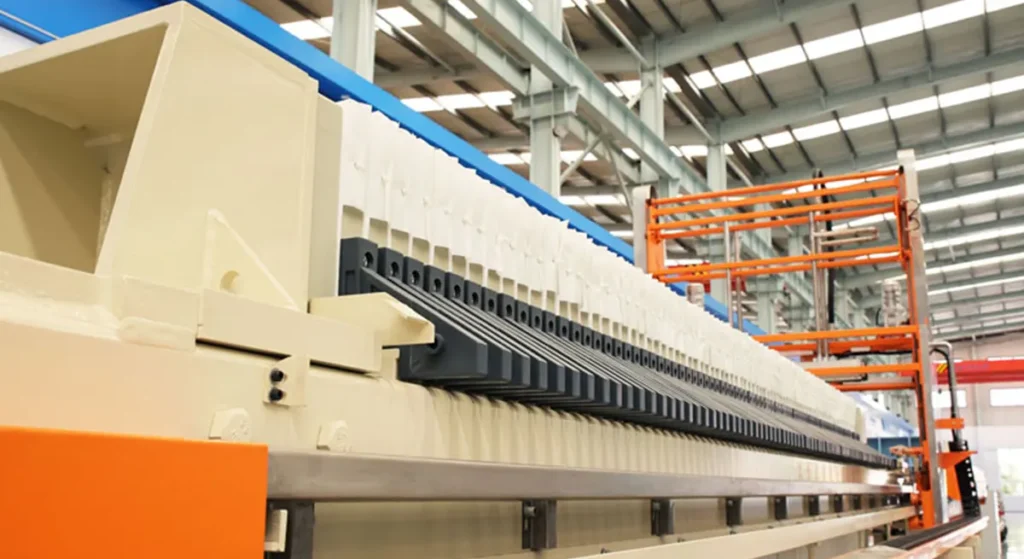
What Are the Main Components?
A typical unit includes a heavy-duty frame, chamber or membrane plates, filter cloths, hydraulic closing system, automatic plate shifter, high-pressure water washing unit with traveling nozzles, and PLC controls. Optional anti-corrosive materials suit aggressive environments.
In the automatic water washing filter presses we build, high-precision CNC machining and robotic welding support structural consistency, while the PLC allows fully automatic or semi-automatic operation.
How Does the Water Washing System Improve Performance?
Cloth blinding is a common cause of slower filtration and longer cycles. Residual fines block cloth pores over time.
The automatic washing system:
- Removes leftover cake after discharge
- Restores cloth permeability
- Reduces manual cleaning and cloth replacement frequency
- Helps keep cycle times and cake moisture more consistent
Sticky or fine-particle slurries benefit most.
Where Is It Commonly Used?
It is applied in municipal and industrial sludge dewatering, mining, chemical and pigment production, food processing, sand and coal washing, papermaking, and petrochemical wastewater. It suits plants that run continuous shifts and face rapid cloth blinding.
What Are the Advantages and Limitations?
Advantages
- Less manual cloth cleaning
- More stable filtration speed and cycle times
- Longer cloth life
- Lower labor needs
- Programmable washing schedules
- Compatible with chamber or membrane plates
Limitations
- Higher capital cost than a basic automatic press
- Needs clean water supply and drainage
- Adds a short interval when washing runs
- Wash-water quality and pressure must stay stable
From the projects we have engineered, the choice is usually driven by labor cost, cloth replacement frequency, and the need for steady throughput.
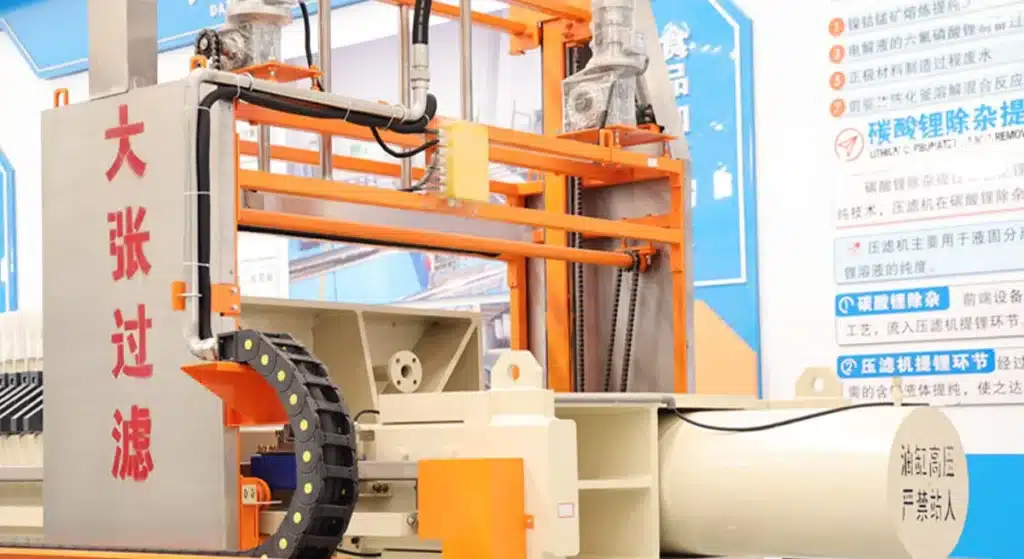
Key Factors When Specifying One
Define filtration area and chamber volume, plate type (chamber or membrane), washing system capacity, desired washing frequency, materials of construction, available utilities, and automation level. Accurate slurry data or pilot testing confirms expected gains in cloth life and cycle stability.
Frequently Asked Questions
How often does the washing system run?
It is programmable. Many plants wash every 10–50 cycles; sticky materials may need more frequent cleaning.
Does it use a lot of water?
Focused high-pressure jets keep consumption controlled. Recycled process water can sometimes be used.
Can washing be added to an existing press?
Retrofitting is possible in some cases, but a purpose-built unit offers better integration of plate shifting, nozzle travel, and PLC control.
Is it suitable for both chamber and membrane plates?
Yes. The washing system works with either plate type according to cake-dryness targets.
How does washing affect overall cycle time?
It adds a short step after discharge, but by preventing progressive blinding it often improves average daily throughput.
An automatic water washing filter press helps plants maintain consistent filtration performance and reduce manual intervention by combining automated plate handling with systematic high-pressure cloth cleaning.