
A well-designed filter press can produce filter cake with residual moisture as low as 15–25% on many industrial and mineral slurries, and commonly 35–50% on municipal wastewater sludge. Membrane filter presses consistently deliver 5–15 percentage points lower moisture than standard chamber units on the same feed. Final dryness depends far more on slurry characteristics, operating pressure, cycle design, and cloth selection than on filter area alone. At DZ Environmental we manufacture both program-controlled chamber and automatic membrane filter presses, so the ranges below reflect real performance data from the machines we engineer and supply.
What Moisture Levels Can Different Filter Presses Achieve?
Most modern chamber filter presses operating at 6–8 bar produce cake containing 30–45% residual moisture on typical industrial slurries and 50–65% moisture on municipal sludge. Membrane filter presses that add a secondary squeeze of 10–16 bar routinely reach 18–30% moisture on industrial feeds and 40–55% moisture on municipal sludge. High-pressure membrane systems designed for mineral concentrates can go below 15% moisture when feed solids, particle size, and cloth are correctly matched.
These figures are residual moisture by weight after the full filtration and squeeze cycle. They assume proper polymer conditioning and a complete cycle that includes adequate filtration time and, where applicable, air blow-down. Undersized pumps, blinded cloths, or incomplete cycles will push moisture significantly higher.
Chamber vs Membrane: How Much Drier Is a Membrane Press?
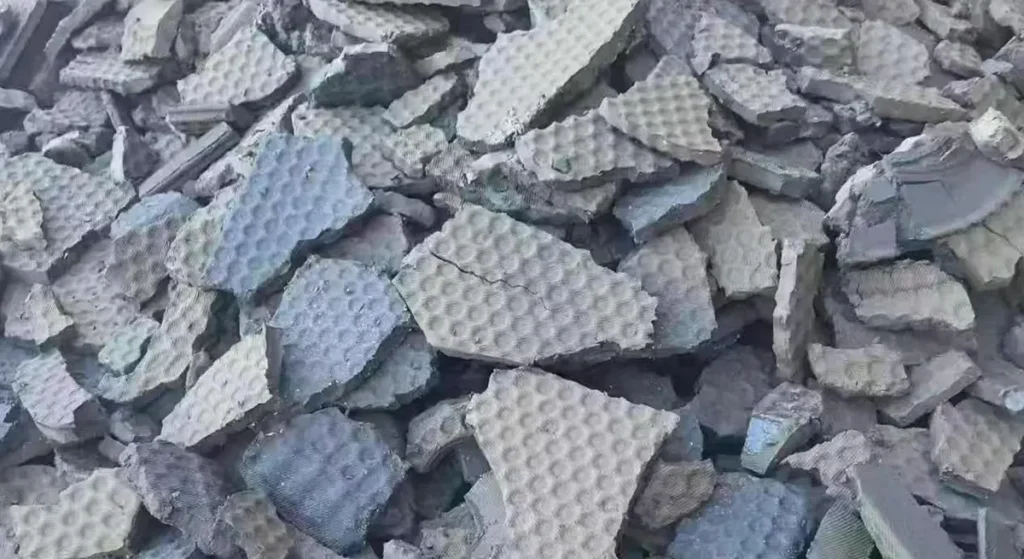
A membrane filter press typically reduces cake moisture by 5–15 percentage points compared with a recessed-chamber press processing the same slurry under the same feed conditions. The difference comes from the secondary squeeze: after the chambers are filled and the primary filtration is complete, inflated membranes compress the cake further and force additional water out through the cloth.
| Parameter | Chamber Filter Press | Membrane Filter Press |
|---|---|---|
| Typical feed pressure | 6–8 bar | 6–8 bar (fill) + 10–16 bar squeeze |
| Municipal sludge moisture | 50–65% | 40–55% |
| Industrial slurry moisture | 30–45% | 18–30% |
| Mineral concentrate | 20–35% | 12–22% |
| Cycle time impact | Baseline | Usually 10–25% longer |
| Cake handleability | Often sticky or wet | Firmer, stackable, lower transport cost |
In the membrane presses we build, high-precision CNC machining and robotic welding keep plate sealing surfaces flat under repeated high-pressure cycles, which is essential for consistent squeeze performance and leak-free operation.
What Factors Control Final Cake Dryness?
Five variables dominate final moisture content.
Slurry characteristics. Higher feed solids concentration, coarser particles, and lower compressibility all favor drier cake. Municipal activated sludge is highly compressible and retains more water; mineral tailings and many chemical precipitates release water more readily.
Operating pressure profile. Primary filtration pressure builds the cake structure. Secondary membrane squeeze pressure then determines how much additional water is expressed. Going from 8 bar chamber pressure to 15 bar membrane squeeze often yields the largest single moisture reduction.
Filtration and squeeze time. Stopping the cycle too early leaves the cake unsaturated. Extending filtration until filtrate flow drops to a low, steady rate, followed by a controlled squeeze period, consistently improves dryness.
Filter cloth selection. Cloth weave, yarn type, and surface finish affect both filtrate clarity and cake release. A cloth that blinds early restricts flow and traps moisture inside the cake. Correct cloth selection for particle size and chemistry is one of the highest-leverage decisions.
Chemical conditioning. Proper polymer dosing creates a floc structure that releases water under pressure. Under- or over-dosing both increase residual moisture and can extend cycle time.
Our program-controlled machines integrate these functions so operators can lock in proven pressure ramps, squeeze times, and blow-down sequences rather than relying on manual judgment each cycle.
Typical Dryness by Industry Application
Municipal wastewater sludge. Chamber presses commonly deliver 35–45% dry solids (55–65% moisture). Membrane presses regularly reach 45–55% dry solids when polymer conditioning and cycle times are optimized. Further drying usually requires thermal methods.
Mining and mineral processing. Concentrates and tailings respond well to high pressure. Membrane filter presses frequently produce cake below 20% moisture, sometimes approaching 12–15% on coarser particles. This dryness reduces transport cost and improves stackability for dry stacking.
Chemical and pigment production. Many precipitates and catalysts can be dewatered to 20–30% moisture. Corrosive or high-temperature feeds may require polypropylene or stainless-steel plates and chemically resistant cloths.
Food and pharmaceutical. Hygiene and product recovery often take priority over absolute dryness. Cake moisture in the 30–40% range is common when residual product value or cleanability constraints limit pressure or cycle aggressiveness.
From the projects we have engineered across these sectors, the biggest dryness gains come from matching plate type and pressure capability to the specific slurry rather than simply increasing filter area.

How Can Operators Push Cake Moisture Lower in Practice?
Start with accurate feed characterization: solids content, particle size distribution, and compressibility. Then verify that the feed pump can reach and hold design pressure for the full filtration phase. Replace or clean cloths as soon as cycle times lengthen or filtrate quality deteriorates. Optimize polymer type and dose through jar tests rather than fixed recipes. Finally, use the membrane squeeze stage fully—many plants under-use the available squeeze pressure or cut the squeeze time short to save cycle time, trading moisture performance for throughput.
Automatic plate shifting, cloth washing systems, and consistent hydraulic closing force reduce the variability that causes wet spots and incomplete discharge. These features are standard on the automatic membrane and chamber lines we supply.
When Is a Drier Cake Worth the Investment?
Calculate the cost of transporting and disposing of every extra percentage point of water. In regions with high landfill or incineration fees, dropping residual moisture from 55% to 45% can cut disposal mass by roughly 18% for the same dry solids. On large municipal or industrial plants the annual savings often justify the higher capital cost of a membrane system within two to four years. On low-volume or low-disposal-cost applications, a well-operated chamber press may remain the more economical choice.
The decision framework is straightforward: if disposal or transport cost per wet tonne is high, or if the cake must meet a strict stackability or landfill acceptance limit, membrane technology usually pays back. If the primary need is simply volume reduction at moderate cost, a chamber filter press is often sufficient.
FAQ
What is the lowest moisture a filter press can realistically achieve?
On favorable mineral or chemical feeds with high-pressure membrane technology, residual moisture can reach 12–18%. Municipal sludge rarely goes below 40% moisture without thermal drying.
Does higher pressure always mean drier cake?
Up to the point where the cake becomes incompressible. Beyond that, additional pressure yields diminishing returns and can damage plates or cloths.
How much drier is membrane cake compared with chamber cake?
Typically 5–15 percentage points lower residual moisture on the same slurry, provided the membrane squeeze is fully utilized.
Can cake dryness be improved without changing equipment?
Yes. Optimizing polymer dose, extending filtration time until filtrate flow stabilizes, ensuring full design pressure, and maintaining clean, correctly selected cloths often reduce moisture by several points.
Why does municipal sludge stay wetter than industrial slurry?
Activated sludge particles are highly compressible and form a dense, low-permeability cake that traps water. Mineral and chemical particles are usually more rigid and release water more readily under the same pressure.
How does cycle time affect final moisture?
Incomplete filtration or truncated squeeze leaves unbound water in the cake. A properly completed cycle is essential for reaching the moisture levels the press is capable of.
Is air blow-down useful for further drying?
Air blow can displace additional free water after the squeeze stage and is especially effective on more permeable cakes. It adds modest cycle time but can improve handleability.
Do all membrane filter presses deliver the same dryness?
No. Squeeze pressure capability, membrane quality, plate flatness, and control of the pressure profile all influence results. Consistent mechanical precision and reliable automation matter as much as the rated pressure.