
When you specify a filter press for municipal or industrial sludge, three numbers decide the case: cake moisture, cycle time, and operating cost. Moisture drives disposal and haul cost. Cycle time sets dry tons per day on a given footprint. Operating cost is polymer, energy, cloth, and labor. Chamber and membrane presses both work; the fit depends on compressibility, target dryness, and cycles per shift.
At DZ Environmental we manufacture program-controlled chamber filter presses and automatic membrane filter presses so the squeeze stage matches your sludge.
What cake moisture can chamber vs membrane presses deliver?
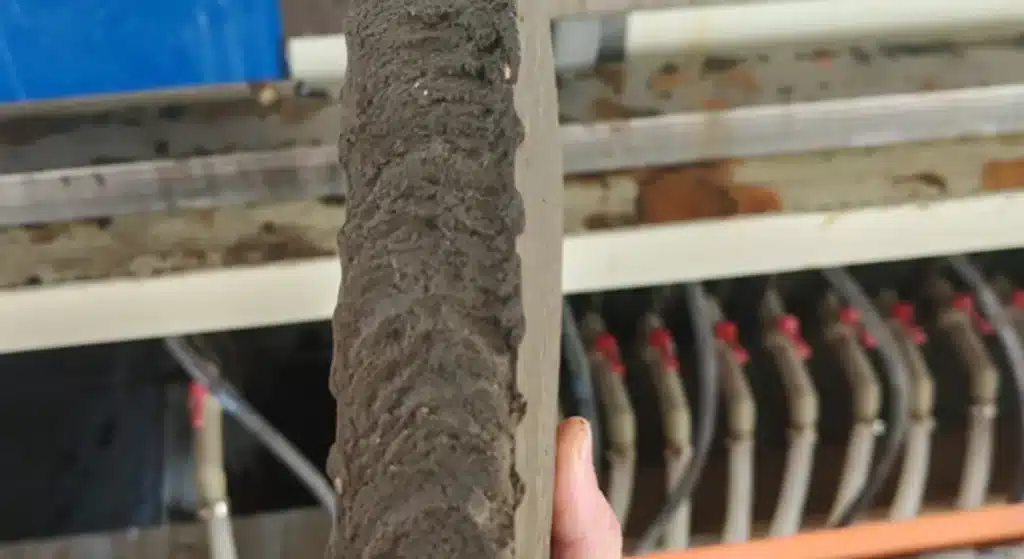
A recessed-chamber press typically leaves municipal biosolids at 55–65% moisture. A membrane press adds a 1.0–1.6 MPa squeeze after filtration and commonly cuts 5–12 percentage points, often reaching 45–55% moisture on the same feed. Mining and high-inorganic cakes run drier on both. Confirm on your slurry; polymer dose moves the result as much as plate style.
| Item | Chamber press | Membrane press |
|---|---|---|
| Typical municipal moisture | 55–65% | 45–55% |
| Secondary squeeze | None | 1.0–1.6 MPa |
| Capex | Lower | Higher |
| Best fit | Acceptable dryness, tighter budget | High disposal or incineration cost |
How does cycle time set press size?
Capacity is daily dry solids, not plate count. A cycle includes fill, filtration, optional squeeze, open, discharge, and cloth wash. Full cycles often run 60–180 minutes. Membrane expression can shorten the hold. Size from dry-solids load, feed solids, target cake solids, and operating hours. Chasing the last 2% moisture can double hold time and cut throughput.
Which operating costs matter after startup?
Polymer, cloth replacement, pump and hydraulic energy, and labor usually outweigh nameplate power. Poor flocculation makes sticky cake that blinds cloth and stretches the cycle. Matched cloth and a staged pressure ramp protect cloth life. Program-controlled machines lock feed pressure, squeeze profile, and open sequence so cycles repeat.
When should you choose a membrane press?
Use membrane plates when disposal cost is high, you need 5–12 points extra dryness, or you want shorter cycles on compressible biological sludge. Stay with a chamber press when 55–65% moisture is acceptable or capital is tight. Both styles can be hydraulic or fully automatic with plate shifting and cloth washing.
What data do you need before you freeze plate size?
Feed solids, daily dry-solids load, compressibility, polymer plan, target cake moisture, hours available, and cake destination. From the projects we have engineered, a short pilot on your sludge locks moisture, cycle time, and dose before you fix the footprint.
FAQ
What moisture can a membrane press reach on municipal sludge?
Typically 45–55%, about 5–12 points drier than a chamber press on the same conditioned feed.
Does a drier cake require a larger press?
Not always. Drier cake cuts wet mass but may need a longer cycle. Throughput is dry solids per day versus cake per cycle and cycles per day.
How large is the polymer effect?
Often the biggest lever. Correct dose and mixing can drop moisture several points and protect cloth without changing the machine.
Are automatic presses only for large plants?
No. Program-controlled chamber and membrane units cut labor and cycle scatter on mid-size plants as well.
Does higher feed pressure always dry the cake more?
Only until the cake compresses and loses permeability. A staged ramp plus membrane squeeze is usually more effective than one high-pressure fill.