
Filter cloth blinding raises cycle time, wetter cake, and replacement cost. You prevent it by matching cloth weave and material to particle size and chemistry, keeping polymer dose stable, and washing on a fixed schedule. Automatic high-pressure washing restores permeability without manual scrubbing. At DZ Environmental we integrate these functions on program-controlled chamber, membrane, and Automatic Water Washing Filter Presses so cloth performance stays consistent.
What causes filter cloth blinding?
Blinding occurs when fine particles, polymer residue, or scale plug cloth pores. Sticky biological sludge and overdosed polymer are common triggers. Abrasion from sharp mineral particles shortens life independently. Chemical attack from acid or chloride degrades fibers. Stable feed solids and correct conditioning limit the problem at the source.
How do you select the right filter cloth?
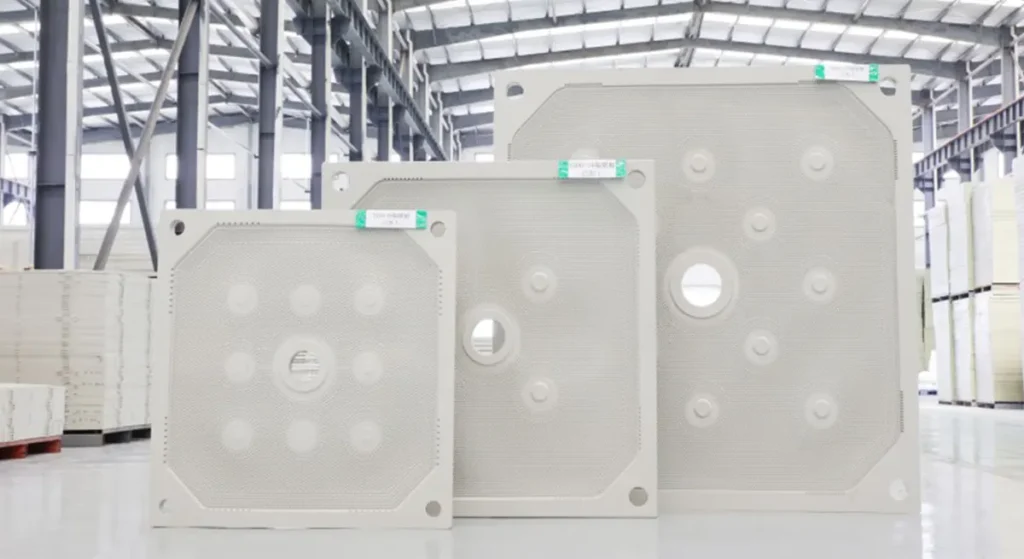
Match weave (plain, twill, or satin), permeability, and material (polypropylene, polyester, or nylon) to your slurry. Finer particles need tighter weave; abrasive solids need stronger fibers. Surface finish affects cake release. Test on your sludge; a cloth that releases cake cleanly often outlasts a tighter one that blinds. In the presses we build, cloths are specified with the plate pack so sealing stays reliable.
When does automatic cloth washing pay off?
Automatic high-pressure washing justifies itself when you run multiple cycles per shift or handle sludge that blinds quickly. Manual washing adds 15–40 minutes and risks cloth damage from scraping. Programmed sprays clean pores between cycles and cut labor. Our Automatic Water Washing Filter Presses and program-controlled machines sequence wash with plate shifting so permeability recovers without long stops.
How does polymer conditioning affect cloth life?
Stable polymer dose—commonly 3–8 kg active per tonne of dry solids for municipal sludge—forms filterable flocs without excess residue. Overdosing creates sticky cake that blinds cloth and lengthens cycles. Underdosing leaves fines that penetrate pores. From the projects we have engineered, consistent dosing and staged pressure ramps protect cloth better than simply adding filtration area.
What maintenance practices extend cloth life?
Wash on a fixed interval, avoid scraping cake off the cloth, inspect for tears after discharge, and replace only when permeability or sealing fails. Track cycle time trends. Use stainless or coated components if chemistry attacks cloth or frames. German-standard plates and CNC machining in our machines keep plate faces flat so cloth sealing remains even.
| Practice | Effect on cloth life | Labor impact |
|---|---|---|
| Stable polymer dosing | Reduces residue blinding | Low |
| Auto high-pressure wash | Clears pores each cycle | Minimal |
| Manual scraping | Shortens life via damage | High |
| Matched weave & material | Improves release and flow | Low |
FAQ
How often should filter cloths be washed?
Wash after every few cycles or on a fixed schedule when permeability starts to drop. Automatic systems make frequent washing practical.
Does membrane squeeze increase cloth blinding?
No. A short secondary squeeze often shortens the long fill tail and can reduce overall blinding risk when polymer is stable.
How long do filter cloths typically last?
Months to a year depending on abrasion, chemistry, polymer control, and wash discipline. Weave and washing matter more than press type.
Can the same cloth handle municipal and industrial sludge?
Sometimes for short campaigns, but dedicated cloths usually give better cycle times and longer life when particle size or chemistry differs.