
In industrial wastewater treatment, a suitable filter press helps reduce sludge volume and weight, easing the burden of subsequent storage, transportation, and disposal. How can you select the right sludge dewatering equipment for your operating conditions? DZ Environmental recommends considering the following five factors.
1. Understand the Sludge Characteristics
Sludge source, feed solids content, particle size, viscosity, and corrosiveness are fundamental to filter press selection. Sludge from chemical processing, electroplating, and mineral processing has different characteristics, requiring appropriate filter cloths, wetted-part materials, and filtration processes. If the material’s filtration performance is unclear, sample testing can help guide equipment selection.
2. Define the Processing Requirements
When selecting industrial sludge dewatering equipment, consider the daily sludge volume, feed solids content, and operating hours to determine the required filtration area and chamber volume. The calculation should also account for feeding, membrane squeezing where applicable, cake discharge, and cleaning time to match equipment capacity to the production schedule.
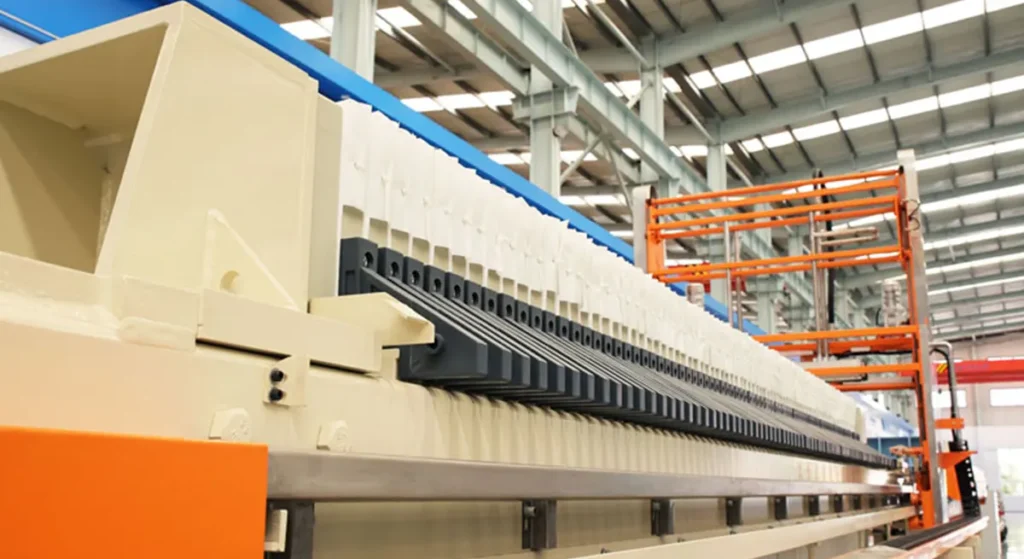
3. Choose the Filter Press Type Based on Dewatering Goals
A chamber filter press uses feed pressure to separate solids from liquids. A membrane filter press adds a squeezing stage after the filter cake forms to remove additional moisture. Selection should consider the material characteristics, target cake moisture content, and subsequent disposal requirements. Actual dewatering performance should be evaluated through an assessment of operating conditions or filtration testing.
4. Select Appropriate Automation Features
For projects with frequent operating cycles, automatic plate shifting, automatic filter cloth washing, and integrated control systems can help reduce repetitive manual work. Automation options should also take cake discharge performance, cleaning requirements, and on-site maintenance conditions into account.
5. Consider Site Layout and Operating Costs
A filter press operates alongside equipment such as feed pumps, piping, conveyors, and sludge hoppers. During selection, check the available installation space, cake discharge clearance, and maintenance access. Energy consumption, consumables, labor, and maintenance costs should also be evaluated.
DZ Environmenta supplies chamber filter presses, membrane filter presses, and related auxiliary equipment, providing solid-liquid separation equipment selection support based on material characteristics and site conditions.
If you have an industrial sludge dewatering project, please share your sludge type, daily processing volume, feed solids content, and target cake moisture content. If complete data is not yet available, you can start by sharing the information you have to help us assess your requirements.