
Yes—one hygienic filter press can handle multiple fermentation or biopharma campaigns when materials, seals, cloths, and cleaning procedures are compatible with every product and when changeover is validated. The limiting factors are residue carryover, chemical compatibility, and time to prove cleanliness. Carbon-steel or poorly drainable designs make multi-campaign use impractical. 316L stainless with CIP-compatible geometry is the practical platform. At DZ Environmental we build stainless steel filter presses, including program-controlled chamber and membrane versions, for sequential campaigns under controlled changeover.
What must be compatible across campaigns?
Product-contact materials, seals, and filter cloths must tolerate every process fluid and every CIP chemistry in the sequence. A seal or cloth that degrades in one solvent can contaminate the next batch. 316L stainless is widely compatible; elastomers and cloth media need checks against the full campaign list. From the projects we have engineered, the first step is a compatibility matrix of fluids, cleaners, and temperatures.
How does cleaning validation enable shared use?
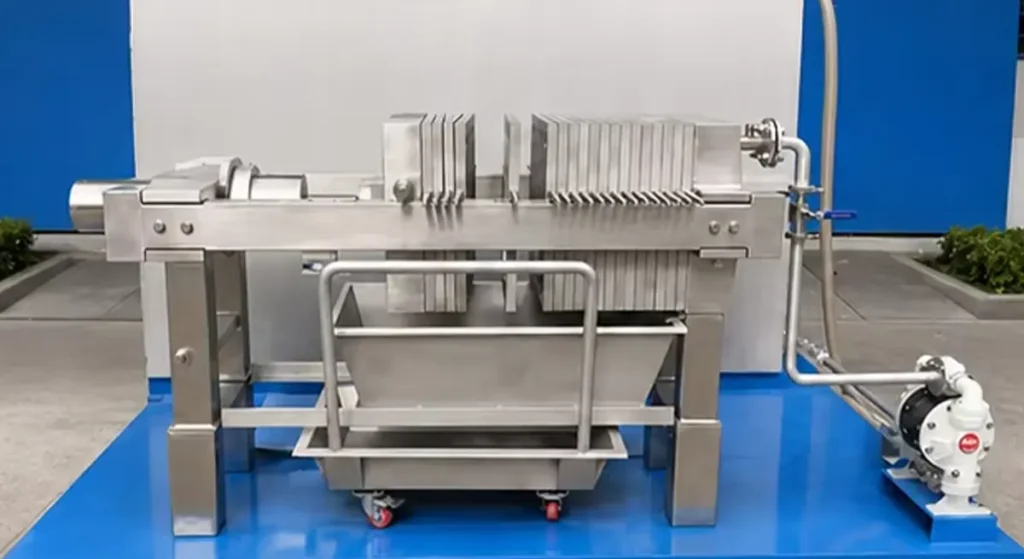
Validated CIP (and SIP where required) must reduce residue to an accepted limit for the next product. Drainable plate edges, manifolds, and discharge paths reduce hold-up and shorten rinse times. Automatic plate shifting and optional washing improve access and repeatability. Program-controlled sequences keep wash volume, temperature, and contact time consistent so validation data remain meaningful.
When is a dedicated press still preferable?
Dedicate a press when products have extreme potency, highly dissimilar solvents, or residue limits so tight that shared equipment cannot be proven clean in the available turnaround. High-value or highly toxic intermediates often justify dedicated lines. Shared presses work best when campaigns share similar chemistry and cleaning regimes.
Chamber or membrane for multi-campaign duty?
Both can serve multiple campaigns if hygienic design and validation are in place. Membrane presses add a squeeze step that can lower cake moisture and residual solids after discharge, which may ease cleaning. A program-controlled automatic membrane filter press keeps squeeze and discharge profiles consistent. Chamber presses remain suitable for free-filtering broths.
| Factor | Shared press | Dedicated press |
|---|---|---|
| Capex | Lower | Higher |
| Changeover time | Required | Minimal |
| Cleaning validation | Mandatory | Simpler |
| Best fit | Similar chemistry | High potency, strict limits |
What data is needed before sharing a press?
List every product, process solvents, CIP agents and temperatures, residue acceptance criteria, and available changeover time. Confirm seal and cloth compatibility for the full set. Specify whether the frame is in the wash-down zone. Our stainless steel filter presses can be configured for validated multi-campaign use when these inputs are clear.
FAQ
Does multi-campaign use require 316L? Yes for product-contact surfaces in most fermentation and biopharma duties.
Can the same cloth be used across campaigns? Only if it is chemically compatible and can be cleaned to the next product’s residue limit. Many plants change cloths at changeover.
Does automation help changeover? Yes. Program control makes wash and discharge steps repeatable for consistent validation.
How long does a typical changeover take? Often hours rather than minutes when validation is strict, depending on hold-up and sampling.
Is a hybrid frame acceptable? Yes if process-contact parts are hygienic stainless and the carbon-steel frame stays outside wash-down.