
A filter press changeover typically takes from 30 minutes to several hours. Recipe-only switches with an automatic wash finish in under an hour on most program-controlled machines. Full cloth changes on medium to large presses usually require two to six hours, depending on plate count, crew size, and whether automatic washing is fitted.
The exact duration depends on what you are changing and how the press is equipped.
What steps make up a typical changeover?
A complete changeover includes draining residual slurry, opening the plate pack, washing or replacing filter cloths, inspecting plates and seals, loading the new PLC recipe, and running a short test cycle. When only the process recipe changes and cloths stay the same, the mechanical work shrinks to a thorough wash and recipe recall.
How does press size and automation affect time?
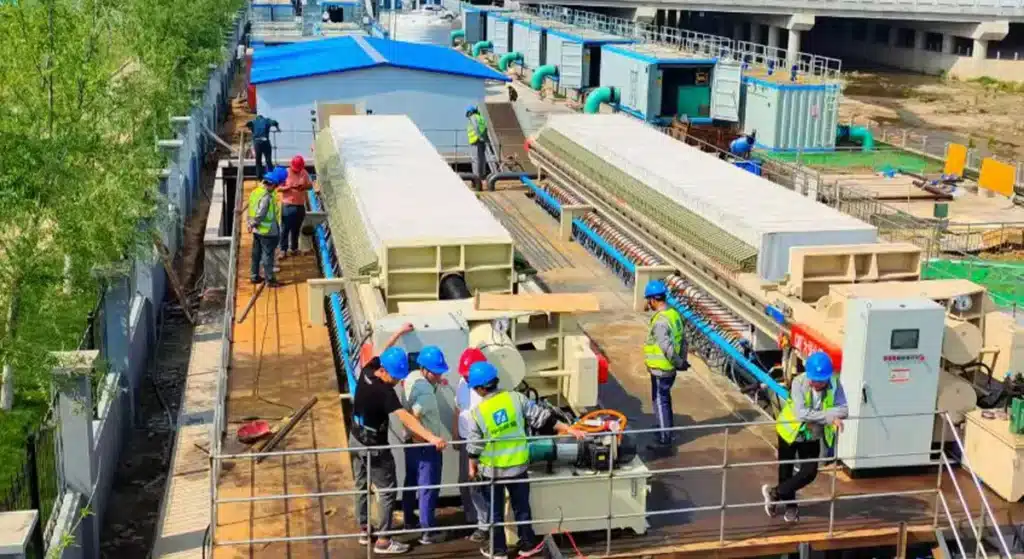
Larger filtration area and higher plate counts increase cloth-handling time. A 50–100 m² press with a two-person crew can often complete a full cloth change in two to three hours. Presses above 300 m² may need four to six hours or more without automation. Program-controlled opening, shifting, and high-pressure cloth washing cut both labor and elapsed time. In the automatic water washing filter presses we build at DZ Environmental, integrated sprayers clean cloths between cycles and reduce manual scrubbing during changeovers.
Cloth change versus recipe-only switch
Switching stored recipes on a program-controlled machine takes only minutes once the wash is finished. Replacing every cloth is the longest step. Pre-staged cloth sets and clear plate numbering speed the work. When you move between municipal and industrial sludge, dedicated cloths for each stream are usually the better long-term choice even if the initial change takes longer.
How automatic washing shortens the process
High-pressure automatic washing removes residual solids and polymer from the cloth pores, so a full manual strip-down is needed less often. After a campaign, a programmed wash cycle followed by recipe selection is often enough to prepare the press for the next sludge type. This approach keeps most dual-duty changeovers under two hours on the chamber and membrane presses we manufacture.
Practical ways to keep changeovers short
Store separate pressure and squeeze recipes for each sludge. Keep spare cloth sets ready and labeled. Schedule changeovers at the end of a shift so the next crew starts with a clean machine. Confirm that seals, drip trays, and filtrate lines are clear before closing the pack. From the projects we have engineered, these simple preparations consistently reduce downtime more than extra crew size alone.
| Changeover type | Typical duration | Main time drivers |
|---|---|---|
| Recipe switch + auto wash | 30–90 minutes | Wash cycle and inspection |
| Partial cloth replacement | 1–3 hours | Number of cloths changed |
| Full cloth change (100–200 m²) | 2–4 hours | Plate count and crew size |
| Full cloth change (>300 m²) | 4–6+ hours | Plate count, access, automation |
FAQ
Can a changeover be completed in under one hour?
Yes, when only the recipe changes and automatic high-pressure washing is used.
Does membrane squeeze add time to the changeover?
No. Squeeze settings are stored in the recipe and load instantly with the rest of the sequence.
How many people are normally needed?
Two operators handle most medium presses; larger packs benefit from three or four for cloth handling.
Should cloths be changed every time sludge type changes?
Not always. Compatible streams can share cloths for short periods, but dedicated sets give more consistent cycle times.
What is the fastest way to prepare for the next campaign?
Run the automatic wash program, select the stored recipe, and verify cloth condition before the first fill.
Do stainless-steel presses take longer to change over?
No. Construction material does not affect changeover time; plate count and washing method do.
How often should a full cloth change be planned?
Base the interval on observed blinding and cake release rather than a fixed calendar schedule.