
Yes. A single program-controlled filter press can process both municipal and industrial sludge when cloth, process recipes, and materials of construction are matched to each stream. Shared hydraulic frames and PLC systems make the switch practical on most plants that handle both types of slurry.
Municipal sludge is typically biological, compressible, and polymer-conditioned. Industrial sludge—mining tailings, chemical precipitates, food residue, or pharmaceutical streams—varies in particle size, abrasiveness, pH, temperature, and solids content. The same machine works for both when three elements are adjusted between campaigns.
What differences matter most between the two sludge types?
Municipal biosolids are usually high in organics and respond well to cationic polymer. Industrial streams can be granular, abrasive, acidic, alkaline, or high-temperature. Particle size distribution and compressibility determine filtration speed and final cake moisture. These differences drive cloth selection and pressure profiles more than the press frame itself.
What must change when you switch from municipal to industrial sludge?
Three items normally change:
- Filter cloth (weave, material, and surface finish matched to particle size and chemistry)
- PLC recipe (fill pressure ramp, membrane squeeze pressure and time if fitted, air-blow sequence)
- Materials of construction (standard polypropylene plates and carbon-steel frames for most duties; stainless or coated components for corrosive or hygienic industrial streams)
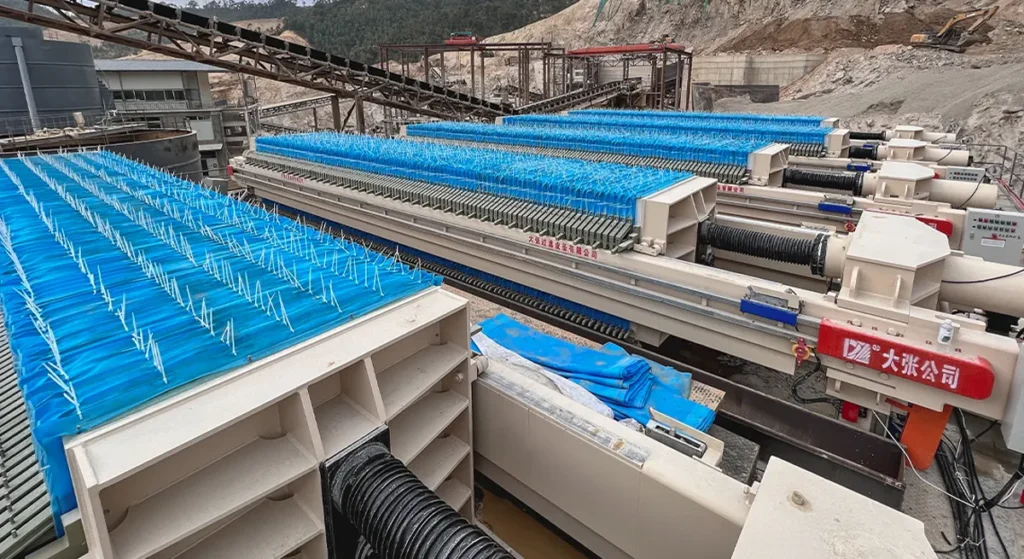
At DZ Environmental the program-controlled chamber and automatic membrane filter presses we build store multiple recipes so operators can recall the correct sequence without mechanical redesign.
How do program-controlled presses make dual use practical?
Automatic plate shifting, high-pressure cloth washing, and recipe memory keep cycle times consistent across sludge types. In the membrane presses we manufacture, squeeze pressure can be set independently for each recipe, helping you reach different target cake moistures. Between campaigns a thorough automatic wash and, if required, a short flush limit cross-contamination.
When is a single press not enough?
Extreme differences in temperature, chemical aggressiveness, or particle hardness may require dedicated cloth sets or separate plate packs. Continuous high-volume campaigns of two very different streams can also favor two machines for operational simplicity. For most plants that process municipal biosolids plus a limited range of industrial slurries, one well-specified press remains the economical choice.
What data do you need before confirming dual capability?
Provide sludge type, feed solids range, target cake moisture, daily dry-solids load, pH, temperature, and any cake-washing or hygiene requirements. From the projects we have engineered, correct cloth and conditioning almost always matter more than extra filtration area when one press serves both duties.
| Factor | Municipal sludge | Typical industrial sludge |
|---|---|---|
| Compressibility | High | Low to high (varies widely) |
| Common conditioning | Cationic polymer | Polymer or none |
| Cloth priority | Cake release & blinding | Abrasion & chemical resistance |
| Typical materials | PP plates, carbon steel | PP or stainless, coated frames |
| Recipe complexity | Moderate | Often higher |
FAQ
Can the same cloth be used for both sludge types?
Sometimes for short campaigns, but dedicated cloths usually give better cycle times and longer life.
Do I need a membrane press for dual duty?
Not necessarily. Chamber presses work well when target moisture is similar; membrane squeeze helps when industrial cake must be drier.
How long does a changeover take?
Cloth change plus recipe selection typically takes one to a few hours, depending on plate count and wash requirements.
Will residual polymer or solids from one sludge affect the next?
A full automatic water wash and optional flush reduce carry-over to acceptable levels for most applications.
Is stainless steel required for industrial sludge?
Only when the slurry is corrosive or food/pharma hygiene rules apply. Standard construction covers the majority of mixed duties.
What cycle time difference should I expect?
Industrial granular slurries often filter faster; biological sludge may need longer fill and squeeze times. Separate recipes keep both predictable.
Can one press handle three or more different industrial streams plus municipal sludge?
Yes if each stream has its own stored recipe and compatible cloth. Complexity rises with the number of changeovers.