
Cake dryness, stable cycle time, cloth life, and how well the machine matches your sludge decide whether a filter press lowers disposal cost or becomes a bottleneck. When you size equipment for municipal sludge, mining tailings, or chemical slurry, start with those four factors instead of plate count alone.
At DZ Environmental we manufacture program-controlled chamber and automatic membrane filter presses, so the choice is process-driven rather than brand-driven. The notes below reflect how those machines are specified on real plants.
How dry does the cake need to be?
Target cake moisture first. Municipal biological sludge typically leaves a chamber filter press at about 65–75% moisture and a membrane press at about 55–65% after squeeze. Industrial and mineral sludges can go lower when solids are granular and polymer dose is correct. Each 5–8 percentage-point drop in moisture cuts trucking and landfill mass. Membrane squeeze at 1.2–1.6 MPa is the usual lever when disposal cost dominates.
Chamber or membrane filter press?
A chamber (recessed) press is simpler and cheaper when cake at 65–75% moisture is acceptable and feed is consistent. A membrane press adds squeeze after filtration and typically removes another 5–12 percentage points of water. Use chamber units for many mining and chemical duties; use membrane units when landfill fees or incineration limits force drier cake. Both types are built on the same program-controlled frames we supply.
| Factor | Chamber filter press | Membrane filter press |
|---|---|---|
| Typical municipal cake moisture | 65–75% | 55–65% |
| Extra squeeze | No | Yes (1.2–1.6 MPa) |
| Cycle time | Often shorter fill | Fill + squeeze |
| Capex | Lower | Higher |
| Best when | Disposal cost is moderate | Dryness is the main cost |
What cycle time can you actually run?
Throughput is chamber volume × cycles per day, not nameplate area. Poorly conditioned sludge can stretch a cycle from 60 minutes to 3 hours. Polymer type, dose, mixing energy, and feed solids (usually 2–6% for municipal sludge) set filtration speed. Program-controlled machines hold pressure ramps and squeeze times so cycles stay repeatable. Automatic plate shifting and cloth wash keep the next fill from waiting on operators.
How long will the filter cloth last?
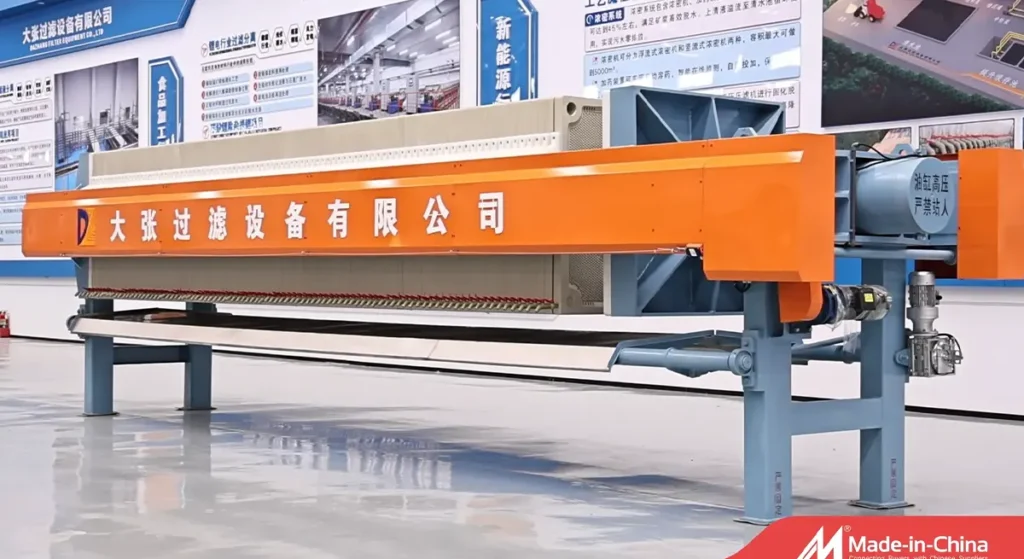
Cloth blinding is the most common cause of rising cycle time. High-pressure automatic water washing, correct weave and surface finish, and avoiding over-dosing polymer extend cloth life. In the automatic water washing filter presses we build, integrated sprayers clean pores between cycles and reduce manual washing. Cloth selection must match pH, temperature, and particle size of your slurry.
Does automation pay on your shift pattern?
Manual plate pull and cloth wash work on small, low-duty machines. On 100–1000 m² presses, program-controlled opening, shifting, and washing cut labor and missed cycles. PLC recipes store pressure profiles for different sludges so night-shift results match day-shift results. Stainless steel frames and plates are specified when the slurry is corrosive or the plant is food or pharmaceutical grade.
What feed data do you need before you size plates?
Give the supplier: sludge type, feed solids, target cake moisture, daily dry solids, pH, temperature, and whether cake washing or air blow-down is required. Chamber depth (commonly 30–40 mm) and filtration pressure (0.6–1.5 MPa on chamber units) follow from those numbers. From projects we have engineered, undersized conditioning or wrong cloth causes more failures than undersized area.
FAQ
What cake moisture should I specify for municipal sludge?
Chamber presses commonly deliver 65–75%; membrane presses 55–65% when polymer and squeeze are set correctly.
When is a membrane filter press worth the extra cost?
When landfill, transport, or incineration cost drops enough to recover the squeeze system within a few years.
How much does polymer conditioning change results?
Correct polymer and mixing often matter more than extra filtration area. Poor flocculation lengthens cycles and raises cake moisture.
Can one press handle both municipal and industrial sludge?
Yes if recipes, cloth, and materials are changed. Shared hydraulic and PLC frames make that practical.
How often should cloth be washed?
Every cycle on automatic high-pressure wash systems; otherwise when filtrate rate or cake release declines.
What filtration pressure is typical?
0.6–1.2 MPa feed on chamber presses; membrane squeeze often 1.2–1.6 MPa.
Do I need stainless steel?
Use stainless or coated frames when chloride, acid, or hygiene rules apply. Standard carbon-steel frames with PP plates cover most municipal and mining duties.