
A membrane filter press is a batch solid-liquid separation machine that uses recessed plates fitted with flexible membranes to achieve higher cake dryness than a standard chamber filter press. After the initial filtration phase, the membranes inflate and mechanically squeeze the filter cake, forcing out additional liquid. This secondary squeeze is the defining feature that allows membrane presses to deliver lower residual moisture and often shorter cycle times.
At DZ Environmental we manufacture program-controlled automatic membrane filter presses alongside chamber designs. In the projects we have engineered, the membrane version is frequently selected when plants need drier cake for disposal cost reduction or tighter process requirements.
How Does a Membrane Filter Press Work?
The operating cycle builds on the familiar chamber press sequence but adds a dedicated squeeze phase:
- The hydraulic system closes and locks the plate pack, forming sealed chambers.
- Slurry is pumped into the chambers under pressure. Solids collect on the filter cloths while filtrate exits through the drainage ports.
- Once the chambers are largely filled and filtrate flow declines, the feed pump stops.
- A squeeze medium (water or air) is introduced behind the flexible membranes. The membranes expand and apply uniform pressure—typically 12–16 bar—directly onto the cake.
- After the squeeze holds for the designed duration, pressure is released, the plate pack opens, and the drier cake is discharged.
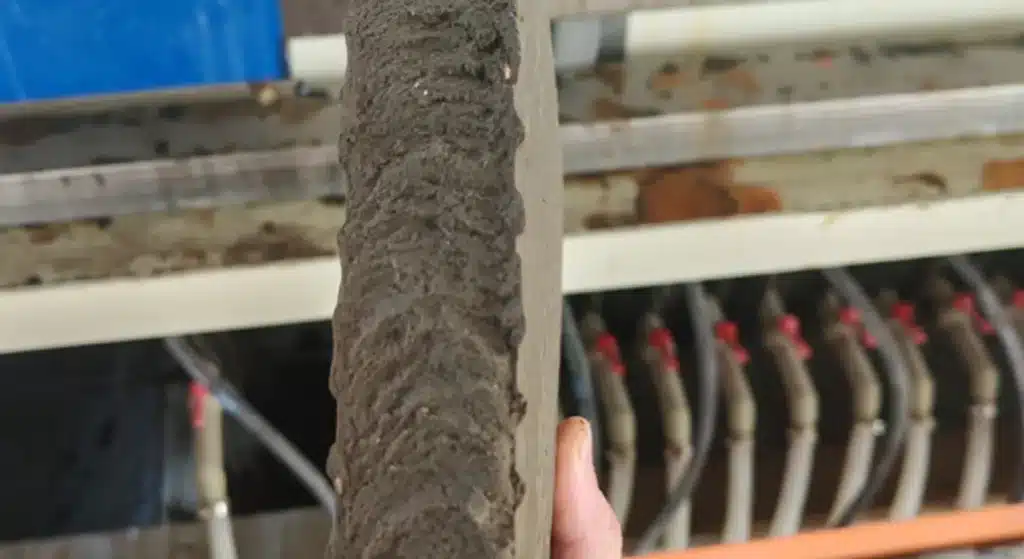
The membrane squeeze can reduce residual moisture by an additional 5–12 percentage points compared with the same slurry processed on a chamber-only press.
What Are the Main Components of a Membrane Filter Press?
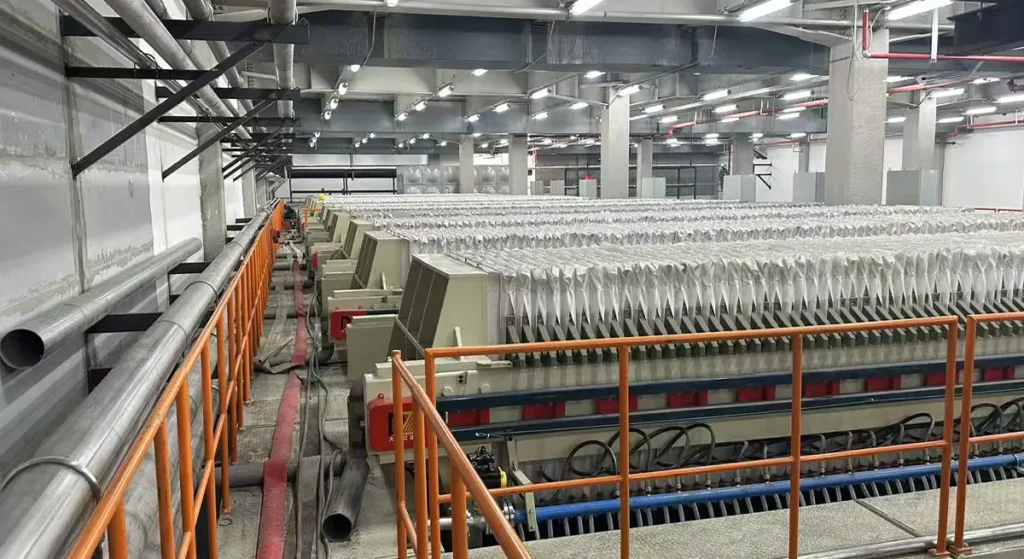
A complete machine includes:
- Heavy-duty frame designed for higher closing forces
- Membrane filter plates (polypropylene core with elastomer or polypropylene membranes on one or both sides)
- Filter cloths matched to particle size and chemical conditions
- Hydraulic closing and locking system
- Squeeze circuit with pumps, valves and pressure controls
- Feed pump, piping and instrumentation
- Optional full automation: automatic plate shifting, cloth washing and PLC supervision
In the membrane presses we build, high-precision CNC machining and robotic welding help maintain plate flatness and membrane sealing integrity—critical factors for consistent squeeze performance over thousands of cycles.
What Cake Moisture and Cycle Times Can Be Expected?
Performance varies with sludge characteristics, but typical industrial results are:
| Parameter | Membrane Filter Press | Standard Chamber Press |
|---|---|---|
| Municipal sludge cake moisture | 50–62% (often ≤55%) | 60–72% |
| Moisture reduction vs chamber | 5–12 percentage points lower | Baseline |
| Cycle time | Often 20–40% shorter | Longer |
| Cake uniformity | High | Good |
| Sensitivity to incomplete fill | Lower (squeeze compensates) | Higher |
These figures assume proper polymer conditioning and correct operating pressure. Compressible biological or municipal sludges benefit most from the membrane squeeze.
Where Is a Membrane Filter Press Commonly Applied?
Membrane filter presses are widely used when drier cake or higher throughput justifies the investment:
- Municipal wastewater sludge dewatering
- Industrial biological sludge and digestate
- Mining concentrates and certain tailings
- Chemical and pharmaceutical process streams
- Food and beverage residues that require low residual moisture
They are especially valuable when disposal or transport costs are high, or when the cake must meet specific dryness targets for incineration, land application or further processing.
What Are the Advantages and Limitations?
Advantages
- Significantly lower cake moisture on compressible materials
- Shorter overall cycle times in many applications
- More uniform cake and better release characteristics
- Greater process flexibility when slurry solids content varies
- Potential reduction in downstream handling and disposal costs
Limitations
- Higher capital cost than an equivalent chamber press
- Additional components (membranes and squeeze system) require periodic inspection
- Slightly more complex control logic, although modern PLC systems manage this automatically
From the projects we have engineered, the economic case is usually driven by the value of the extra dryness rather than by the equipment price difference alone.
Key Factors When Specifying a Membrane Filter Press
Important parameters to define early include:
- Required filtration area and chamber volume based on daily dry solids load
- Design filtration pressure and maximum squeeze pressure
- Membrane material and configuration (single-sided or double-sided)
- Degree of automation and integration with upstream thickening
- Filter cloth specification matched to the slurry
- Available utilities for the squeeze medium (water or air)
Accurate slurry characterization and, where possible, pilot testing remain the most reliable way to confirm expected moisture and capacity.
Frequently Asked Questions
How is a membrane filter press different from a chamber filter press?
The core difference is the addition of flexible membranes that inflate after filtration to squeeze the cake. Chamber presses rely only on feed-pump pressure.
What squeeze pressure is typically used?
Most industrial membrane presses operate in the 12–16 bar range, although plate design and slurry characteristics can support higher or lower values.
Do membranes need frequent replacement?
Membrane life depends on chemical exposure, pressure cycles and maintenance. In well-designed systems they often last several years before replacement becomes necessary.
Can a membrane press handle the same range of materials as a chamber press?
Yes. The membrane design is suitable for most applications where a chamber press would be considered, and it performs particularly well on compressible or variable slurries.
Is full automation standard?
Program-controlled automatic membrane filter presses with plate shifting, cloth washing and integrated PLC control are common. These features reduce labor and improve cycle consistency.
Does the squeeze phase always produce drier cake?
On highly incompressible materials the incremental benefit may be small. On typical municipal and biological sludges the moisture reduction is consistent and measurable.